

Qualifying land in Texas is generally appraised at its agricultural productivity value rather than its market value, so it isn't exempt from all property taxes. In Travis County, Form 50-129 is normally filed by April 30, with late filing allowed until appraisal-roll certification, typically in mid-July, subject to a 10% penalty.
That distinction changes how you approach the entire process. The practical question isn't just how to get agricultural tax exemption, because Texas usually provides a special productivity appraisal, not a blanket exemption. Your land must be actively and principally used for qualifying agriculture, meet the county's intensity standard, satisfy the required history, and remain documented after approval.
Why Agricultural Relief Is a Special Appraisal, Not a Tax Exemption
Calling this benefit an “agricultural exemption” creates the first serious misunderstanding. Texas generally continues to tax the land, but the county appraisal district assesses qualifying acreage according to its agricultural productivity value rather than its open-market value. A rural tract can therefore have a market value shaped by residential development potential while receiving a different taxable valuation based on its capacity to produce agricultural products. The Texas Comptroller's agricultural and timber guidance describes this 1-d-1 open-space agricultural appraisal system and its use-based requirements.
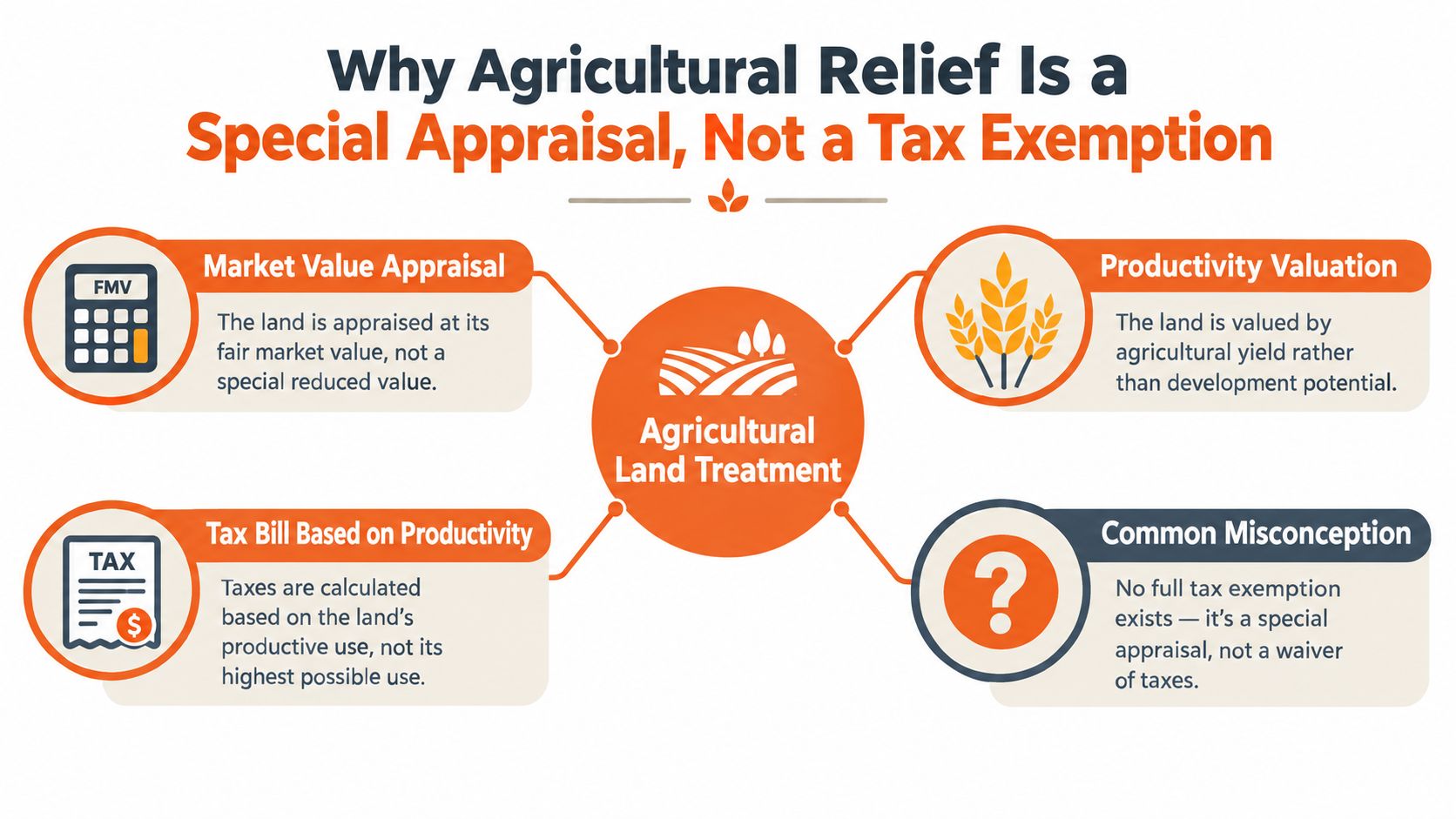
The chief appraiser still records the property's market value. The productivity value is calculated by capitalizing the average net income that prudent management would have produced from agricultural activity during the five years preceding the current year. Texas law sets the capitalization rate at 10% or the Farm Credit Bank of Texas interest rate from December 31 of the preceding year plus 2.5 percentage points, whichever is higher. Texas Property Tax Code Chapter 23 establishes this valuation framework.
Why the distinction matters
The special appraisal applies to qualifying land and its agricultural use, not automatically to a residence, barn, or every improvement on the parcel. The county evaluates whether the land is currently devoted principally to agriculture and whether its use reaches the degree of intensity generally accepted in the local area.
The usual history requirement is agricultural or timber use for at least 5 of the preceding 7 years. Qualifying activities can include cultivating soil, producing crops, raising livestock or poultry, producing fish, planting cover crops, or leaving land idle during normal rotation or a government program. Ownership alone, acreage alone, or a rural appearance doesn't establish eligibility.
For investors, that difference belongs in property due diligence. A market valuation can help assess development potential, while an agricultural appraisal concerns a separate tax treatment based on productive use. A resource on fast property valuation for investors can help frame the market-value side of that comparison, but it won't replace county-specific agricultural documentation.
Eligibility Requirements and the Qualification Workflow
A successful application follows a sequence. Skipping one step often leaves an otherwise plausible operation exposed because the appraisal district needs evidence of actual use, not a statement of future intent.
-
Confirm principal agricultural use. The land must currently be devoted principally to qualifying production. A residence, recreational use, or hobby activity that dominates the property can undermine the claim.
-
Measure local intensity. Your operation must be used at the degree of intensity generally accepted for comparable land in the county. The standard isn't identical across Texas. Grazing, cropland, hay production, and other activities are judged against local practice.
-
Prove the five-of-seven-year history. Gather records showing agricultural or timber use for at least five of the preceding seven years. A newly purchased tract may qualify when historical-use evidence and successor documentation support the required history, but the buyer's future plans aren't enough.
-
Complete Form 50-129. The Texas Comptroller identifies Form 50-129 as the application for 1-d-1 open-space agricultural appraisal. Identify the land's principal use accurately and make the application consistent with the supporting records.
-
File with the correct appraisal district. The application must be submitted to the appraisal district in each county where the property is located. Local deadlines control the practical filing calendar.
Practical rule: A small amount of agricultural activity can be genuine without being sufficient. The county tests whether the land is principally and actively used for qualifying production.
For Austin-area owners, Travis Central Appraisal District lists January 1 through April 30 as the normal filing window. It permits late filing until certification of the appraisal roll, typically in mid-July, but applies a 10% penalty to late applications, as described in the Comptroller's agricultural appraisal application guidance.
Building a Defensible Evidence File Before You File
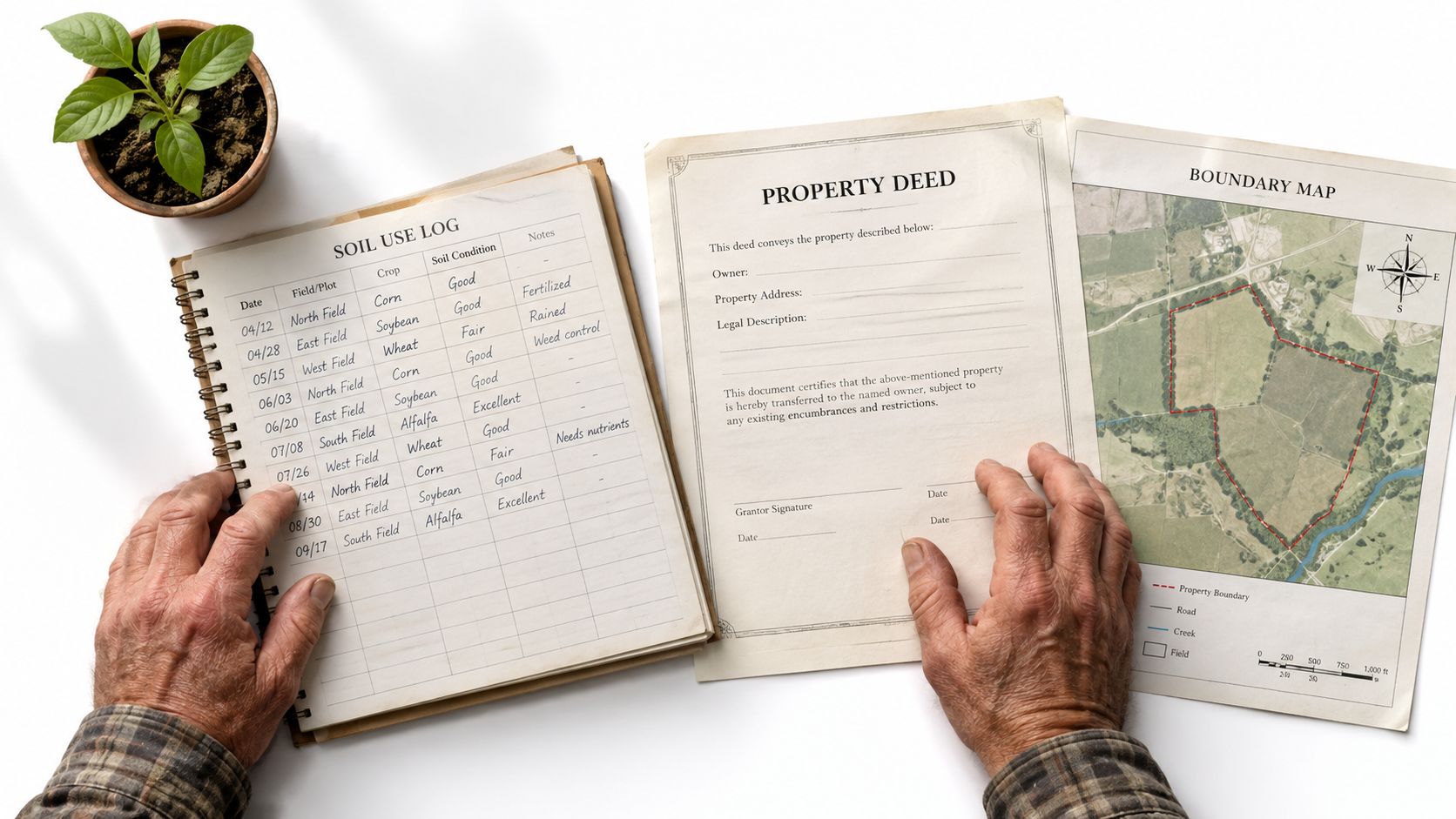
Receipts scattered across email, truck compartments, and bank statements rarely make a strong application by themselves. Build the file before January 1, then connect every document to the county's intensity standard and the use stated on Form 50-129.
Start with a parcel map and acreage breakdown. Then organize the operational evidence by tax year:
- Land control: Keep lease agreements, grazing agreements, and records identifying who performs the agricultural activity.
- Production inputs: Preserve invoices for seed, fertilizer, feed, fencing, and equipment.
- Livestock evidence: Maintain livestock counts, ownership records, veterinary documentation, and related care records.
- Output records: Include production records, hay documentation, sales records, or other evidence showing what the operation produced.
- Visual proof: Use dated photographs that show fences, pasture conditions, crops, livestock, water infrastructure, or other relevant activity.
- Wildlife records: If wildlife management is involved, retain logs and proof of each management practice rather than relying on hunting or feeding activity alone.
Travis Central Appraisal District states that its minimum grazing benchmark is four animal units. It also explains that productivity values for cropland and pasture use a five-year average of typical income less typical expenses under a cash-lease methodology. Travis CAD's FAQ materials show why a “small herd on large acreage” claim needs more than proof that animals were present.
Reconcile before submission
Map each document to a specific question: What land is being claimed? Who uses it? What is the principal use? How often does the activity occur? Does the evidence cover the required history? Unexplained receipts don't answer those questions.
A structured property tax documents checklist can help organize records before filing. Owners who coordinate several advisers may also find value in an advisory in France when managing broader administrative systems, but the Texas evidence still has to match the local appraisal district's standards.
Travis County Deadlines, Local Rules, and Filing Logistics
Travis County owners should treat the filing calendar as part of the qualification process, not as an administrative afterthought. The normal window runs from January 1 through April 30. A late application may still be accepted until appraisal-roll certification, typically in mid-July, but the county adds a 10% penalty for late filing.
That late window is a safety valve, not a planning strategy. A complete application submitted before April 30 gives you more time to correct missing signatures, clarify acreage, or answer appraisal-district questions without adding a late-filing consequence.
Purchases require historical due diligence
A closing statement or deed doesn't transfer agricultural qualification automatically. The buyer must investigate whether the property's records support the 5-of-7-year history and whether the current operation meets the local intensity standard. Request leases, production records, livestock documentation, and prior appraisal correspondence during due diligence, especially when the seller describes the property as “ag exempt.”
Future plans don't establish present eligibility. If you've bought land that was previously qualified, preserve successor documentation and confirm the county's filing requirements rather than assuming the designation will continue without action.
Use the Travis County appraisal district resource to organize county-specific contacts and procedures. If agricultural activity affects bookkeeping, a directory of pre-vetted Texas bookkeepers may help keep invoices, leases, and production records separated by tax year. The appraisal district, however, decides whether the evidence meets its standards.
Hidden Pitfalls and Wildlife-Management Conversions
The word “exemption” hides two risks. Buyers may assume that any rural acreage, livestock, bees, or occasional hay activity qualifies, while owners who already have the appraisal may overlook the continuing obligation to document active use. That misunderstanding can affect leases, subdivisions, resale decisions, and the financial analysis of a rural investment.
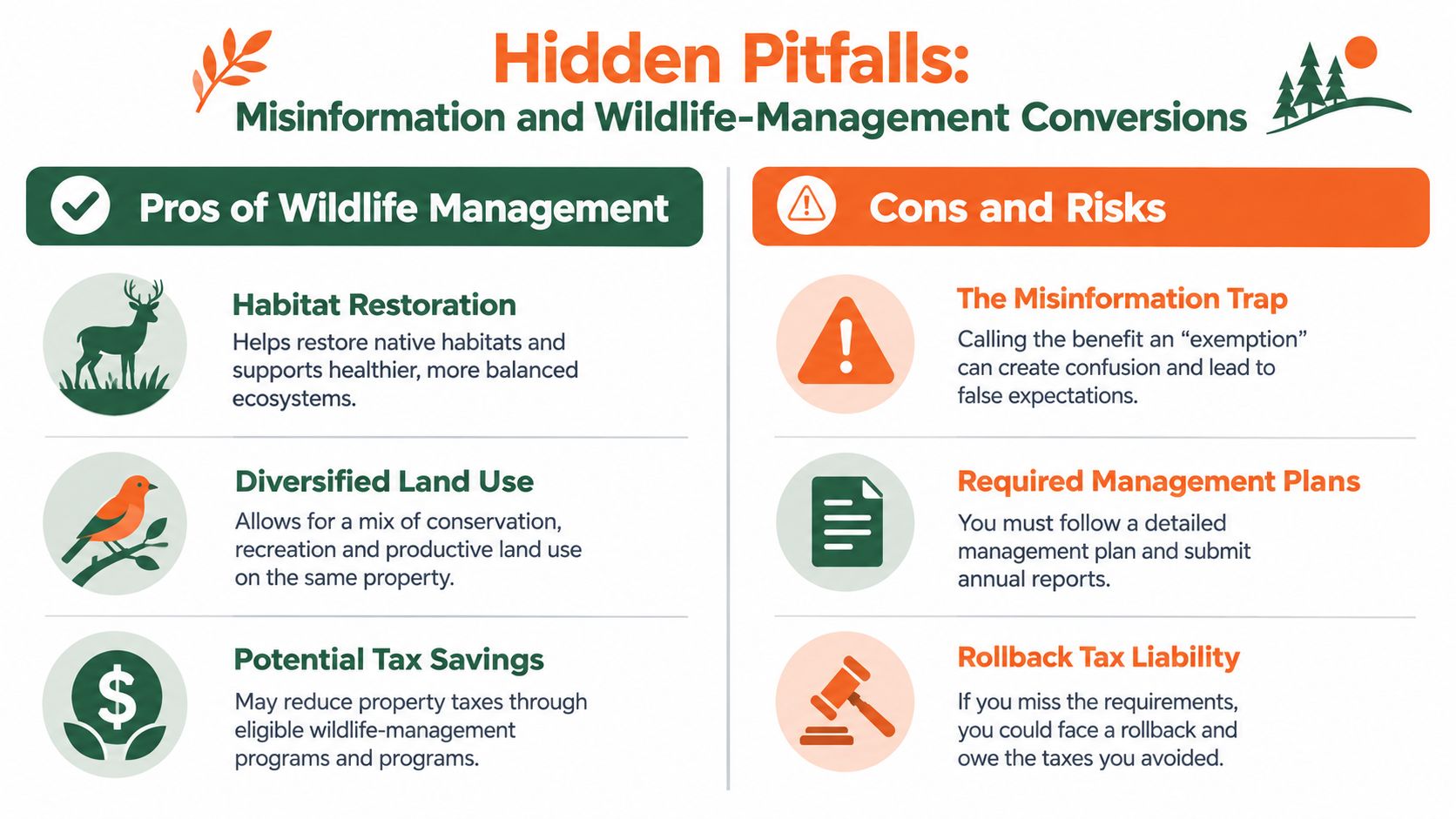
Wildlife management isn't a shortcut around agricultural qualification. Texas requires land seeking wildlife-management appraisal to already be qualified and appraised as open-space agricultural or timber land. A new owner generally can't bypass that prerequisite by creating a wildlife plan after purchase.
The owner must make wildlife management the primary use, submit a plan, and implement at least three of seven recognized practices. Those practices can include habitat, erosion, predator, water, food, shelter, or census management. Occasional hunting, feeding, or leaving land untouched doesn't demonstrate the required management program.
Wildlife valuation can support conservation, but it still functions as a measurable compliance program.
Applications are generally due to the appraisal district by May 1. The property's qualification cycle follows the land rather than restarting when ownership changes, so a sale doesn't erase the need for continuity records. Subdividing or partially developing the tract can change the analysis because the remaining acreage and its primary use must still support the appraisal.
This video provides additional context for owners comparing agricultural production with wildlife management:
The useful question isn't whether hunting or conservation can reduce taxes in the abstract. It's whether the specific acreage already qualifies, whether wildlife management is now the primary use, and whether annual records prove the required practices.
Maintaining Approval and Avoiding Rollback Taxes
Approval isn't the end of the job. Maintain records each year, calendar the county deadline, and review the appraisal whenever ownership, acreage, leases, livestock, or land use changes.
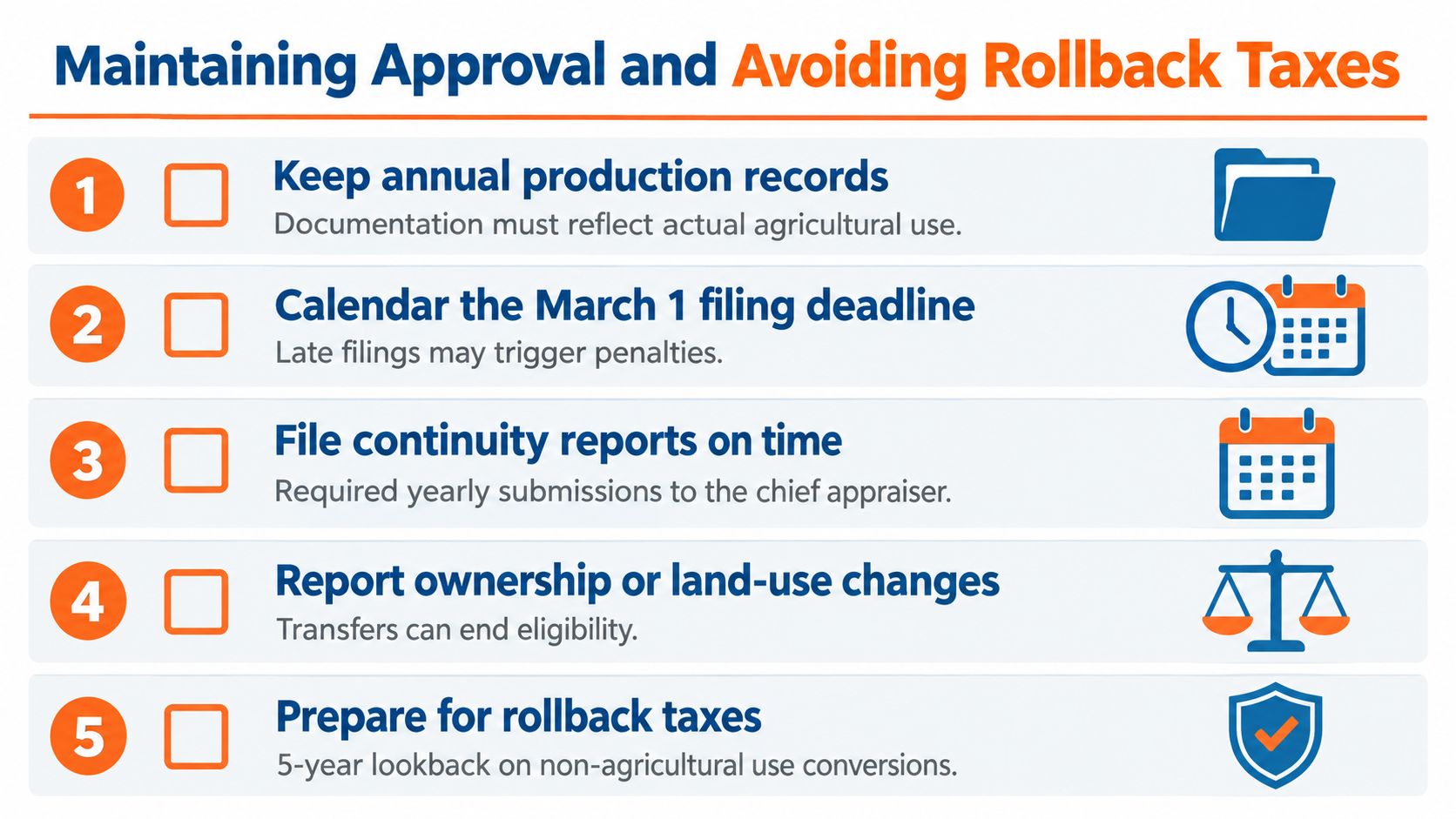
A practical maintenance routine is straightforward:
- Keep annual production records: Preserve evidence that reflects actual agricultural use.
- Calendar filing dates: Don't rely on memory or a prior owner's process.
- Update continuity records: Track leases, livestock, acreage, and management changes.
- Review development plans: Residential or recreational use can become the principal use.
- Assess rollback exposure: Changing qualified land to a nonqualified use can trigger additional taxes for prior years.
Texas appraisal guidance warns that changing qualified land to a nonqualified use can create rollback taxes. That risk makes annual documentation especially important when you build a residence, subdivide acreage, end a grazing lease, or shift from production to recreation. Review rollback taxes in Texas before making a material land-use decision.
Getting Professional Help Without Losing Control of Your File
Professional review makes the most sense when the property has mixed uses, a recent ownership transfer, multiple leases, partial development, or incomplete historical records. A consultant should help you identify the principal use, test the evidence against the county's intensity standard, reconcile documents to Form 50-129, and track the filing deadline.
The valuation itself compares agricultural productivity with market value. The county calculates productivity value by capitalizing average net income from the relevant agricultural activity, using the statutory capitalization framework described earlier. Your adviser should explain which records support eligibility and which records support valuation, because those are related but distinct questions.
INTELLI uses licensed property tax consultants and employs a data first approach, using public and private data to evaluate eligibility, documentation, and valuation evidence. That approach can help owners organize a defensible file while keeping the underlying records and decisions visible to them.
Start by reviewing the property's current use and five-of-seven-year history. Organize leases, invoices, photographs, livestock records, production records, and wildlife logs by tax year, then calendar the applicable county deadline. If the tract has changed hands or includes development plans, obtain a professional review before filing or changing use.
INTELLI helps Texas homeowners, investors, and businesses evaluate agricultural appraisal eligibility, organize supporting evidence, and understand county filing requirements. Visit INTELLI to request a review of your property's use history, documentation, and potential next steps.