

You opened your Hardin County bill expecting a number you could pay and move on from. Instead, you got a stack of rates, districts, and deadlines that feels designed to confuse regular homeowners. That confusion is expensive, because in Hardin County the bill isn't just one county charge, it's a mix of county, school, state, health, and special district levies that can change depending on where the property sits.
If you own a home in Elizabethtown, Radcliff, Vine Grove, or a smaller part of the county, your tax bill can look different from the neighbor's even when the homes are nearly identical. That's the problem most generic guides miss, and it's why hardin county ky property taxes deserve a local, line-by-line read. INTELLI uses licensed property tax consultants and a data first approach built on public and private data, which is exactly the kind of lens you need when the headline number doesn't tell the whole story.
Why Your Hardin County Tax Bill Looks the Way It Does
A Hardin County tax bill usually starts with one big number, but that number is the end result of several authorities working at once. The county sets part of the levy, the school district takes the largest share, and additional charges can come from the state, health department, soil conservation, and local districts. If you only look at the total, you miss the actual driver of the bill, which is where the property sits and how it's classified.
Assessed value matters more than market price
Your bill is built on assessed value, not the price you think your house could sell for. The Property Valuation Administrator, or PVA, sets that assessed value, and every tax rate is applied to it. If the assessment is off, the bill is off, which is why homeowners should treat the assessment as the first thing to verify.
Practical rule: Don't argue the tax bill first. Check the assessment first, because that's the number every levy is built on.
INTELLI's approach is useful here because it starts with the tax base, not the invoice. A data-driven review can compare your property against comparable local properties, then spot whether the assessment is drifting beyond what the market supports. That matters in a county where district placement can change what you owe far more than people expect, and where the purpose of property tax review is usually misunderstood until the bill lands.
A homeowner who understands the structure stops treating the bill like a surprise and starts treating it like a math problem. In Hardin County, that's the right mindset. The county doesn't send you a single flat tax, it sends you a layered result.
Breaking Down Hardin County Property Tax Rates
A Hardin County tax bill can look ordinary on paper and still be wildly different from the next house on the block. The reason is simple, the county rate is only one piece of the bill, and district placement does the heavy lifting. The 2024 county schedule lists the county levy at 11.1 cents per $100 of assessed value, plus 2.2 cents for the Health Department and 0.15 cents for Soil Conservation county rate schedule.
What goes into the bill
In the Hardin County School district, the published 2024 real estate rate includes a state rate of 10.90, a school rate of 65.20, a county rate of 11.10, an agricultural extension rate of 1.800, a health rate of 2.20, and a soil rate of 0.2, for a total of 91.35 cents per $100 of assessed value QPublic rate schedule. That works out to about 0.9135% of assessed value before exemptions.
A property assessed at $200,000 in that district would face roughly $1,827 in annual county-level tax under that schedule. The school levy drives most of that cost, and many owners miss that detail until the bill arrives.
| Taxing Authority | Rate per $100 Assessed Value | Percentage of Total |
|---|---|---|
| State | 10.90 | 11.93% |
| School | 65.20 | 71.39% |
| County | 11.10 | 12.15% |
| Agricultural Extension | 1.800 | 1.97% |
| Health | 2.20 | 2.41% |
| Soil | 0.2 | 0.22% |
The district split matters just as much as the raw millage. Hardin County's published schedule shows 91.35 cents per $100 in the Hardin County School district and 110.65 cents per $100 in the E-town Independent School district. Two homes with the same assessed value can land on very different totals if they sit in different taxing districts.
Independent tax-tracking summaries also place the county's median annual bill around $1,451 to $1,568, with median home values between $205,900 and $254,800, which produces an effective rate of roughly 0.62% to 0.70% county property-tax summary effective-rate history. Use those figures as context, not as a substitute for your own rate sheet. The answer is always in the district math tied to your parcel.
Hardin County owners should stop asking, “What's the county rate?” and start asking, “Which districts overlap my property?”
How the Assessment and Appeal Process Works
The assessment process starts with the PVA, not the sheriff and not the tax bill itself. The PVA assigns the assessed value, and that value becomes the base for every levy that follows. If the number is too high, your bill is too high even if every rate is correct.
Start with the evidence, not the emotion
The strongest appeal cases are built on hard comparison data, condition issues, and clear errors in property characteristics. A sloppy appeal with no backup usually goes nowhere. A tight file with comparable properties, photos, and a clean valuation argument has a much better chance of getting attention.
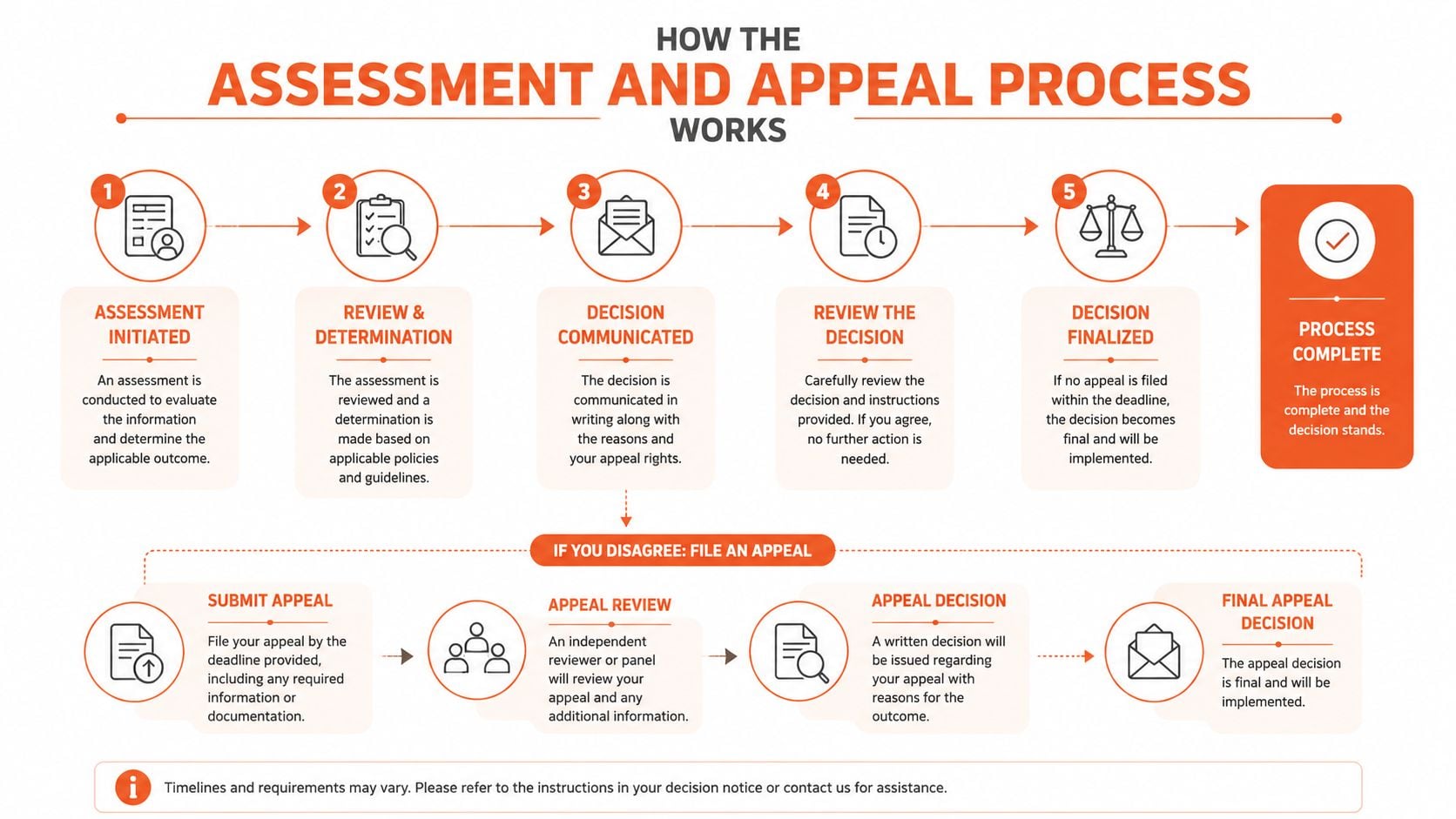
The practical sequence is simple. First, verify the assessment on the notice or county records. Second, gather sales data, photos, repair issues, and anything that shows the value is overstated. Third, file the protest through the proper local channel before the deadline, then show up ready to explain why the number should come down.
A property tax hearing is not a complaint session. It's a valuation review, and the evidence has to support the value you want.
INTELLI's licensed property tax consultants are built for this kind of work. They understand how to package a protest, how to compare properties in the local market, and how to keep the argument focused on valuation instead of frustration. If you want a deeper look at how assessments drive your bill, this explanation of property tax assessments is the right place to start.
Hardin County owners should also understand the difference between a quick informal review and a formal challenge. An informal conversation can clear up a clerical error fast, but a serious overvaluation needs a documented appeal. Don't wait until you've missed your window, because once that happens, the county's number usually stands for the year.
Property Tax Exemptions Available to Hardin County Owners
The easiest savings are the ones people never apply for. That's why exemptions matter more than most owners think, especially for seniors, disabled homeowners, veterans, and people with qualifying property uses. If you're eligible and you haven't filed, you're volunteering to overpay.
Compare the main exemption paths
The Homestead Exemption is the one many older homeowners should check first, especially if they've reached the qualifying age or have a disability that fits the program. Disability exemptions can also reduce the burden for owners who meet the state criteria. Veteran-related exemptions may matter even more for eligible disabled veterans, because they can change the taxable picture in a meaningful way.
Agricultural and historic designations are different. They're not everyday homeowner exemptions, but for the right property they can be significant. If land use or property classification has shifted, the exemption question should be part of the review, not an afterthought.
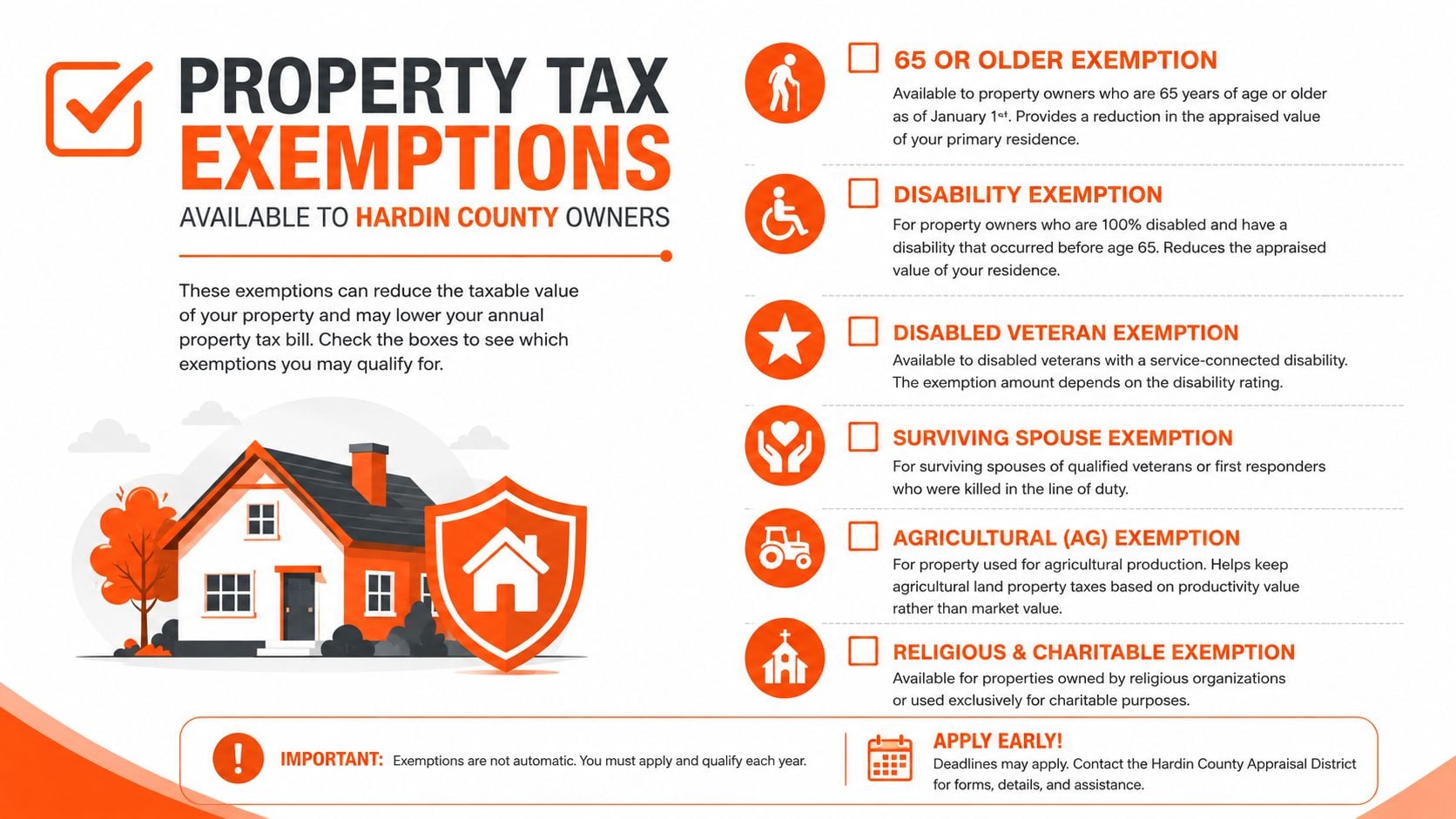
The cleanest way to think about exemptions is this, some are tied to the owner, some to the property, and some to both. A 67-year-old homeowner and a disabled veteran may qualify under different rules, and the savings should be checked separately rather than assumed to stack automatically. If you're unsure where you stand, the right overview is this property tax exemption guide.
Kentucky property-tax trouble often overlaps with broader debt pressure, so homeowners who are juggling multiple obligations should also keep a practical resource like Kentucky IRS debt help in mind. That won't solve a county bill by itself, but it can help families who are trying to keep the entire balance sheet from slipping.
Payment Methods Deadlines and Delinquent Tax Procedures
A Hardin County tax bill gets expensive the moment it is ignored. Pay it through the county's own channels, not through guesswork. The sheriff office runs the tax department and provides a dedicated tax phone line, and the county also offers online bill pay through its website county online bill pay. If you do not mail a payment, use an official county service and keep proof that the payment cleared.
Don't wait until a delinquency becomes a second case file
The part homeowners miss is what happens after a bill turns delinquent. Hardin County's FAQ says the payment path changes depending on whether a foreclosure action has been filed, with some delinquent bills paid through the Clerk's Office and others through the County Attorney's Office Hardin County delinquent FAQ. That split trips people up because a generic Kentucky tax guide usually stops at “pay the bill” and never tells you which office controls the account.
The county also points residents to a delinquent tax calculator Hardin County delinquent FAQ. That means delinquent accounts follow a separate payoff workflow, not a simple balance lookup. If you are behind, confirm which office has your account, then get the payoff amount before the balance grows further.
If foreclosure paperwork exists, do not guess about where to pay. Confirm the office first, then get the payoff amount in writing.
Hardin County property-tax administration is local by design, so you are not dealing with a state-run payment portal. That makes clean records matter even more. Save every receipt, note the office that handled the account, and keep the payment trail organized. If a payment is late, the delay can become an administrative problem just as fast as a financial one.
How INTELLI Helps Hardin County Property Owners Save
The reason this county's tax system causes so much frustration is simple. The bill can be wrong for more than one reason, and most homeowners only look for one. INTELLI is built for that kind of complexity, with licensed property tax consultants and a data first approach that uses public and private data to find overvaluation, missed exemptions, and appeal opportunities before they turn into a full-year overpayment.
What a serious review actually looks like
A real review starts by checking the assessment, then comparing it to local evidence, then checking exemption eligibility, then looking at district placement and special levies. That sequence matters because a homeowner can fix the wrong problem and still leave money on the table. A good analyst doesn't just ask whether the tax is high, they ask why.
INTELLI's work is practical, not decorative. The team prepares evidence for valuation challenges, checks whether legal exemptions were missed, and looks for prior-year overcharges when a recovery audit makes sense. That kind of process is useful in a county where district-level rates shift outcomes and where the bill can be distorted by something as basic as location or classification.
A homeowner doesn't need to become a tax analyst to save money. They need a process that catches the obvious mistakes and the subtle ones. That's where a consultant-led review can beat a DIY approach, especially when the county structure is layered and the delinquency workflow is easy to misread.
Good tax work is mostly discipline, not drama. The file either supports the value or it doesn't.
Key Takeaways and Next Steps for Hardin County Taxpayers
The main lesson is blunt. Hardin County property taxes are not flat, and they're not driven by the county rate alone. The school district, local special levies, and property location can change the final bill in a way that catches owners off guard, especially when two similar homes sit in different taxing zones.
Use this checklist before you pay another bill
- Check the assessment first: Make sure the PVA's value matches the property's condition and market position.
- Verify the district: Compare your property's taxing district against the rate schedule, because the county total changes by location.
- Look for missed exemptions: Seniors, disabled owners, veterans, and qualifying land uses should never be assumed away.
- Confirm the payment path: If taxes are delinquent, identify whether the account is with the Clerk's Office or County Attorney's Office before sending money.

The smartest move is to treat your next bill like an audit, not a routine payment. Pull your assessment, compare the rate structure, confirm your exemptions, and if anything looks inflated, challenge it before the county's number becomes your baseline for another year. That's how you stop leakage instead of just reacting to it.
If you want a clean, data-driven review of your Hardin County property tax position, INTELLI can help you check the assessment, find missed exemptions, and build a valuation challenge backed by real evidence. Visit INTELLI and get a straightforward review before the next bill locks in another year of overpayment.